Your 'No Added Sugar' Drink Plays a Shell Game With Sweetness
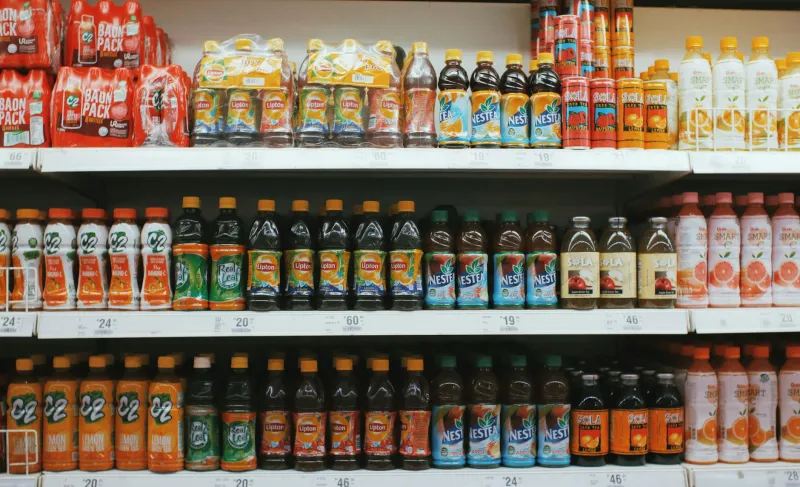
Standing in the beverage aisle, you reach for the cranberry juice with "NO ADDED SUGAR" blazoned across the label. It feels like a smart, health-conscious choice — surely this is better than the sugar-loaded alternatives surrounding it. You flip the bottle around, scan the nutrition facts, and discover something puzzling: 36 grams of sugar per serving. That's more than a can of Coca-Cola.
Welcome to one of the food industry's most successful labeling shell games, where "no added sugar" doesn't mean "low sugar" — it just means the sweetness comes from somewhere else.
The FDA's Sugar Loophole
The "no added sugar" claim is regulated by the FDA, but the rules create a massive loophole that most consumers never see coming. The label only restricts added sugars — sweeteners introduced during processing like high fructose corn syrup, cane sugar, or artificial sweeteners. It says absolutely nothing about naturally occurring sugars that were already present in the ingredients.
This distinction matters enormously in fruit juices, where natural fruit sugars can reach astronomical levels. A 16-ounce bottle of "no added sugar" grape juice contains roughly 60 grams of natural sugar — equivalent to 15 teaspoons of table sugar. The grapes provided all that sweetness naturally, so legally, no sugar was "added."
Food manufacturers have learned to exploit this regulatory gap with sophisticated ingredient sourcing. Instead of adding corn syrup to a drink, they'll use concentrated fruit juices that are essentially natural sugar syrups. White grape juice concentrate, apple juice concentrate, and pear juice concentrate have become the industry's favorite "natural" sweeteners.
The Concentration Game
Here's where the labeling gets truly deceptive: fruit juice concentrates are made by removing water from fruit juice, leaving behind a syrup that's 60-70% sugar by weight. When manufacturers add these concentrates to beverages, they're essentially adding sugar — but since it came from fruit originally, it doesn't count as "added sugar" under FDA rules.
A typical "no added sugar" cranberry juice might contain cranberry juice, white grape juice concentrate, and natural flavors. The cranberries provide tartness and color, but the white grape concentrate provides most of the sweetness. Functionally, this is identical to adding sugar, but legally, it's completely different.
The industry has become so sophisticated at this game that some manufacturers create custom fruit concentrate blends specifically designed to provide sweetness without triggering "added sugar" labeling requirements. These concentrates undergo processing that's chemically similar to refining table sugar, but because they start with fruit, they maintain their "natural" status.
Your Body Doesn't Know the Difference
From a metabolic perspective, your body processes natural fruit sugars identically to added sugars. Fructose from an apple affects your blood sugar the same way as fructose from corn syrup. The liver metabolizes both through identical biochemical pathways.
Dr. Robert Lustig, a pediatric endocrinologist at UC San Francisco who studies sugar metabolism, explains it simply: "Sugar is sugar. Your pancreas doesn't care whether it came from a beet, a cane, or a grape."
 Photo: Dr. Robert Lustig, via blog.insidetracker.com
 Photo: UC San Francisco, via media.bizj.us
This is why many "no added sugar" beverages can spike blood glucose levels just as dramatically as their conventionally sweetened counterparts. The absence of added sugars doesn't translate to better metabolic outcomes.
The Marketing Psychology
Beverage companies understand that "no added sugar" triggers powerful psychological associations with health and wellness. Consumer research shows that shoppers interpret the phrase as meaning "healthier," "lower calorie," and "better for weight management" — none of which are necessarily true.
This labeling strategy allows manufacturers to position high-sugar products in the health-conscious market segment while maintaining the sweetness levels that drive repeat purchases. They're essentially having it both ways: marketing to health-conscious consumers while delivering the sugar hit that keeps people coming back.
The strategy has been remarkably successful. "No added sugar" beverage sales have grown 15% annually over the past five years, even as overall beverage consumption has declined. Consumers are paying premium prices for products they believe are healthier, even when the sugar content rivals conventional sodas.
Reading Between the Lines
So how do you navigate this labeling maze? The key is ignoring marketing claims and focusing on the nutrition facts panel. Total sugar content — regardless of source — is listed in grams per serving. This number tells you exactly how much sugar you're consuming, whether it was added or naturally occurring.
For context, the American Heart Association recommends limiting daily sugar intake to 25 grams for women and 36 grams for men. Many "no added sugar" beverages contain an entire day's worth of sugar in a single serving.
Also check serving sizes carefully. That "no added sugar" juice might list 15 grams of sugar per serving, but if the bottle contains 2.5 servings, you're actually getting 37.5 grams of sugar if you drink the whole thing.
The Bigger Picture
The "no added sugar" labeling phenomenon reveals something troubling about American food marketing: how easily technical regulatory distinctions can be used to mislead consumers. The FDA's added sugar rules were designed to help people identify products with unnecessary sweeteners, not to create a marketing loophole for high-sugar products.
This labeling shell game extends beyond beverages. "No added sugar" yogurts, cereals, and snack bars often use similar concentrate-based sweetening strategies. The result is a marketplace where "healthy" products can contain as much sugar as conventional junk food.
Making Informed Choices
The solution isn't avoiding all "no added sugar" products — some genuinely are lower in sugar. Instead, it's learning to read labels like a food scientist rather than a marketing target. Focus on total sugar content, not marketing claims. Compare products based on grams per serving, not front-of-package slogans.
When you see "no added sugar" on a label, remember: it's not a promise about sugar content, it's a statement about processing methods. Your taste buds — and your blood sugar — will respond to the total sweetness regardless of its origin story.
The real story behind "no added sugar" labeling shows how regulatory complexity can be weaponized for marketing advantage. Sometimes the healthiest choice isn't the one with the most appealing label — it's the one with the most honest numbers.