When Americans Say 'Emergency Room,' They're Thinking of a Hospital That Doesn't Exist
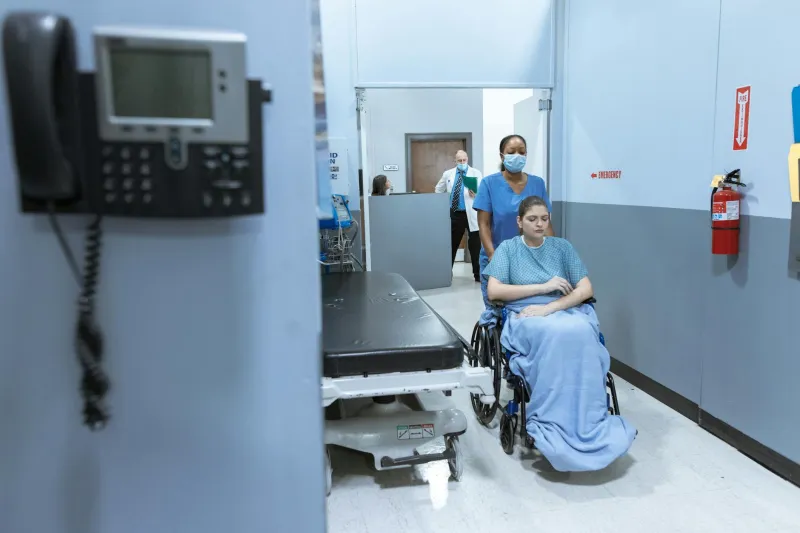
The Emergency Room in Your Mind vs. Reality
Walk into any American emergency room on a Tuesday afternoon and you'll find something that would surprise healthcare reformers: a waiting room full of people with earaches, persistent coughs, and minor injuries that started bothering them three days ago. These patients aren't confused about where they are — they genuinely believe the emergency room is the safest, most comprehensive place to address any health concern that feels serious.
They're wrong, but not because they're uninformed. They're wrong because the entire healthcare system has failed to explain what emergency rooms actually do.
What Emergency Medicine Actually Means
Emergency rooms exist for one primary purpose: stabilization. When you arrive with a heart attack, stroke, or traumatic injury, the ER's job is to keep you alive and stable enough to receive definitive treatment elsewhere. That treatment might happen upstairs in the same hospital, or you might be transferred to a facility with specialized capabilities, but the ER itself isn't designed to cure you.
This distinction isn't semantic — it's fundamental to how emergency medicine works. Emergency physicians are trained to rapidly assess life-threatening conditions and provide immediate interventions, but they're not diagnosticians in the way your primary care doctor is. They're more like medical first responders with advanced training.
The Myth That Costs Billions
The confusion between stabilization and comprehensive care creates a cascade of problems. When Americans treat ERs as their go-to medical resource, they often receive expensive diagnostic tests that wouldn't be necessary in other settings, simply because emergency protocols require ruling out worst-case scenarios.
Consider a typical scenario: You've had chest pain on and off for a week. In a primary care setting, your doctor might start with a detailed history, physical exam, and basic tests, building toward a diagnosis methodically. In the ER, that same chest pain triggers a protocol designed around the assumption that you might be having a heart attack right now. You'll likely receive an EKG, chest X-ray, and blood work immediately — not because the ER doctor thinks you're having a heart attack, but because the emergency setting demands ruling it out quickly.
The result? You get a clean bill of health and a bill that's often 5-10 times higher than the same evaluation would cost in an urgent care center or primary care office.
How We Got Here
This misconception didn't develop in a vacuum. For decades, emergency rooms marketed themselves as comprehensive medical centers, particularly in communities where other healthcare options were limited. Hospital advertisements emphasized phrases like "full-service emergency care" and "complete medical evaluation," language that reinforced the idea that ERs provided thorough, definitive medical care.
Meanwhile, the rise of managed care in the 1990s made accessing primary care increasingly complex. Many Americans found it easier to visit an ER than to navigate insurance requirements, referrals, and appointment scheduling. Emergency rooms, bound by federal law to evaluate anyone who walks through their doors, became the path of least resistance.
The 24/7 availability of ERs also contributed to the myth. When your symptoms worsen at 10 PM on a Saturday, the emergency room is often the only medical facility open. This accessibility reinforced the perception that ERs were designed for comprehensive care rather than crisis intervention.
When the ER Is Actually the Right Choice
Understanding what emergency rooms are designed for helps clarify when they're the appropriate choice. You should head to the ER for symptoms that could indicate immediate threats to life or limb: severe chest pain, difficulty breathing, signs of stroke, severe injuries, or sudden onset of the worst headache of your life.
You should also use the ER when your regular healthcare providers have specifically directed you to do so, or when you're experiencing a rapid worsening of a chronic condition that could become life-threatening.
The Better Alternatives Most People Don't Know About
For the vast majority of health concerns that send Americans to emergency rooms, urgent care centers provide faster, cheaper, and often more appropriate care. Urgent care facilities are designed for the middle ground between primary care and emergency care — things like minor injuries, infections, and new symptoms that need attention but aren't life-threatening.
Many urgent care centers now offer services that were once exclusive to ERs, including basic imaging and laboratory tests. The key difference is that urgent care physicians have time to conduct thorough evaluations without the pressure of emergency protocols.
Primary care remains the most cost-effective option for ongoing health concerns, routine screenings, and management of chronic conditions. Many primary care practices now offer same-day sick visits and extended hours specifically to provide an alternative to emergency room visits.
The Real Takeaway
The emergency room will always be there when you need life-saving intervention, but it was never designed to be America's primary healthcare system. Understanding this distinction doesn't just save money — it often leads to better care. Your earache will get more focused attention at urgent care than in an ER where the staff is trained to look for signs of meningitis.
The next time you're weighing your healthcare options, ask yourself one question: Do I need someone to keep me alive, or do I need someone to figure out what's wrong with me? The answer will point you toward the right type of care.