The American Diner Was Never as Old-School as It Looks
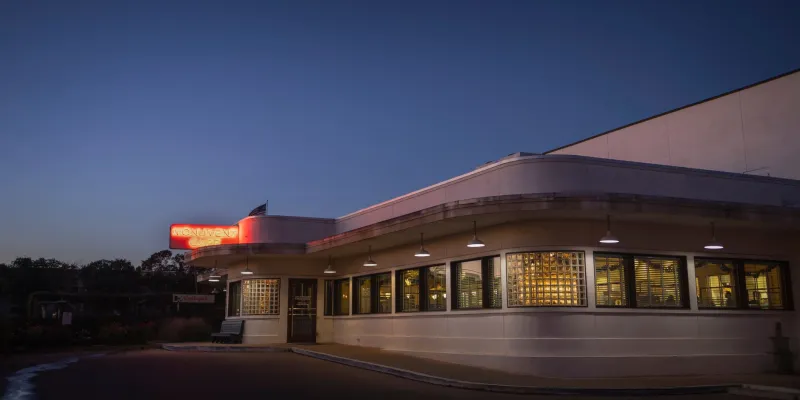
Pull off the highway at the right exit and you'll spot it: the gleaming stainless exterior, the hand-painted sign promising home cooking, the red vinyl stools visible through plate glass. Something in your chest does a small, warm thing. It feels like America. It feels like something that was here before the interstate, before the chain restaurants, before everything got corporate and identical.
Here's the part nobody put on the menu: a lot of what you're feeling was designed in an office.
Diners Didn't Grow Organically
The earliest diners were genuinely improvised — horse-drawn lunch wagons in the 1870s and 1880s that sold food to factory workers who couldn't afford to sit in a proper restaurant. Those evolved into small, stationary structures, often repurposed train cars, serving cheap meals fast. That origin story is real, and it's where the diner's working-class credibility comes from.
But that story ends earlier than most people think. By the mid-20th century, the "diner" had become a commercial product. Companies like the Silk City Diner Company, the Mountain View Diner Company, and most famously the Kullman Dining Car Company were manufacturing diner buildings in New Jersey and shipping them across the country on flatbed trucks. An operator would order a diner the way you'd order a modular home — choose the footprint, pick the finishes, wait for delivery.
The chrome wasn't a coincidence. The stainless steel wasn't a regional quirk. Those were standard options in a prefabricated package, chosen partly because they were durable and easy to clean, and partly because they photographed well and read as "modern" to postwar consumers who associated shiny surfaces with progress.
Nostalgia Built Into a Brand-New Building
Here's where it gets genuinely strange. By the 1950s and 1960s, diner manufacturers and their customers were already marketing nostalgia for a diner era that had barely finished happening. A diner built in 1958 might be designed to evoke a feeling of 1938 — a softer, simpler time that the brand-new building had never experienced.
This is nostalgia as a design specification. Marketing firms understood that American consumers, freshly suburbanized and slightly unmoored, responded powerfully to visual cues that suggested continuity and tradition. The checkered floor tiles, the counter with spinning stools, the pie case — these weren't preserved from an earlier era. They were reproduced to invoke one.
The food followed the same logic. "Home cooking" and "made from scratch" became diner advertising staples even as kitchens standardized around commercial suppliers and frozen ingredients. The feeling of home cooking and the reality of it had already started to diverge.
The 1980s Revival Made It Worse — or Better, Depending on How You Look at It
The diner aesthetic took a hit through the 1970s as fast food chains ate into the market. Then something interesting happened in the 1980s: the diner came back, but as a theme.
Restaurant groups and hospitality consultants rediscovered that the diner's visual language — the chrome, the neon, the pie — carried enormous emotional weight with American consumers. A new wave of "retro" diners opened across the country, many of them designed by the same kind of firms that built shopping mall food courts. The booths were comfortable. The lighting was engineered. The jukebox was decorative.
Ed Debevic's in Chicago. Johnny Rockets, which launched in 1986 and eventually franchised into airports and cruise ships. These weren't diners that had survived — they were diners that had been reconstructed as experiences. The authenticity was the product.
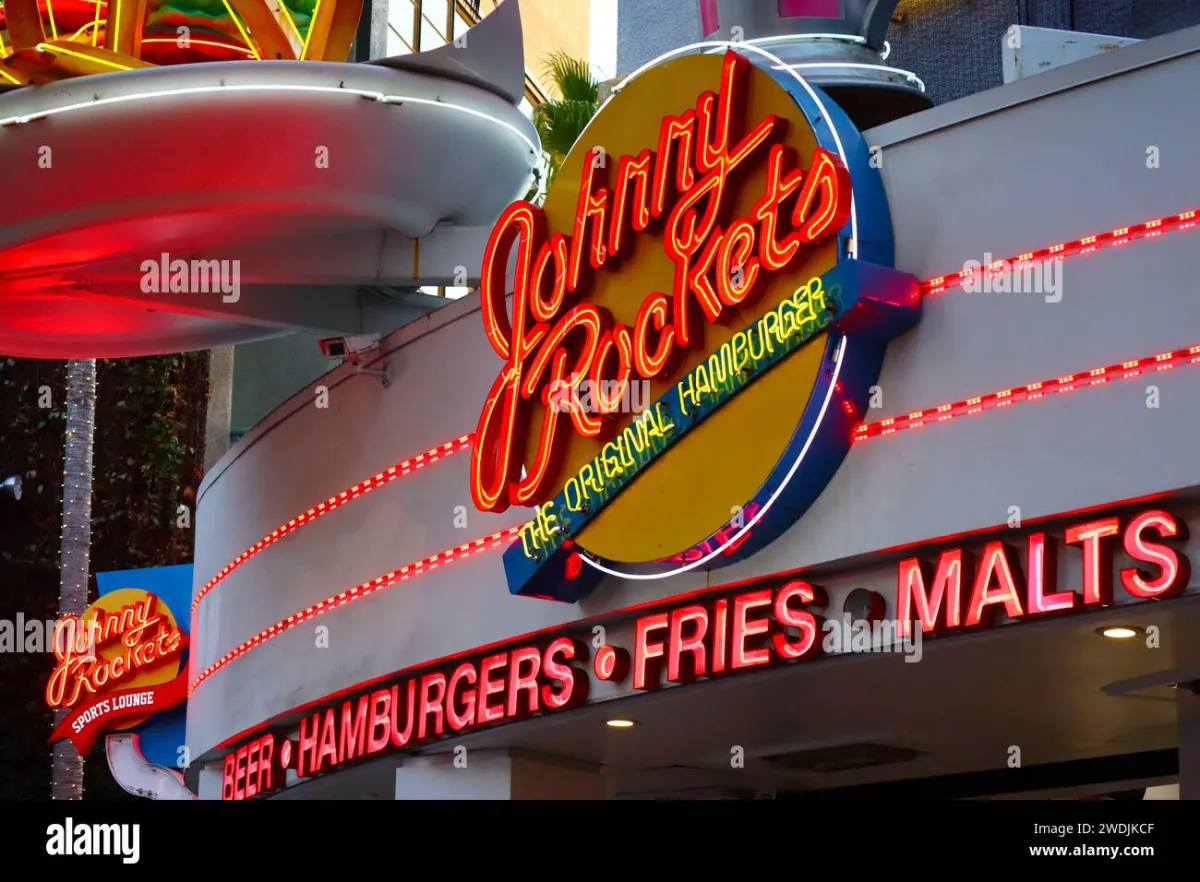 Photo: Johnny Rockets, via c8.alamy.com
 Photo: Ed Debevic's, via images.squarespace-cdn.com
And it worked, because authenticity as a feeling doesn't require authenticity as a fact. If the chrome looks right and the coffee comes in a thick ceramic mug, the emotional transaction completes.
The Playbook Is Still Running
The same formula shows up today in the wave of "vintage-style" diners that have opened alongside interstate highways and in revitalized downtown districts. The distressed signage is laser-cut. The neon was manufactured last year in a factory in China. The menu was engineered by a food consultant to hit specific comfort-food notes.
None of that makes the food bad. None of it makes the experience fake in any harmful sense. But it's worth understanding what you're actually buying when you slide into that booth: a carefully assembled emotional environment designed to make you feel like you've found something real.
The irony is that the original diners of the 1940s and 1950s were doing something similar — selling a feeling of warmth and familiarity to people who were often far from home. The nostalgia business has always been the diner business.
What the Diner Actually Represents
The more honest version of the diner's story is, if anything, more interesting than the myth. It's a story about how Americans process change by creating spaces that feel unchanging. It's about how industrial manufacturing can produce something that reads as handmade. It's about the gap between what a place looks like it is and what it actually is — and how that gap can be maintained for decades without anyone feeling cheated.
Next time you sit at a diner counter and feel that comfortable sense of stepping back in time, you're not wrong to enjoy it. You're just in on the trick now.
The coffee is still hot. The pie is still good. The story behind the chrome is just a little more complicated than the sign out front suggests.