Your Smart Home Is Listening, Learning, and Quietly Building a Profile — Just Not the Kind You'd Expect
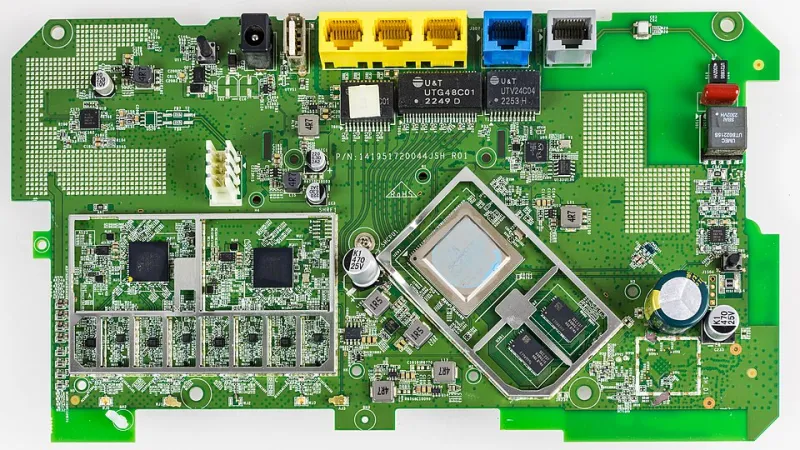
Photo: Raimond Spekking, CC BY-SA 4.0, via Wikimedia Commons
The pitch for smart home technology is irresistible. Lights that turn on when you walk in the door. A thermostat that learns your schedule. A doorbell that shows you who's outside before you get up from the couch. A speaker that answers your questions, plays your music, and sets your timers without you lifting a finger.
It sounds like the future. And in some ways, it is. These devices genuinely do what they advertise. But the reason they exist — the actual business logic behind why Amazon, Google, and a dozen other companies are willing to sell you a sophisticated piece of hardware at a price that barely covers manufacturing costs — is something the commercials leave out entirely.
The Device Isn't the Product. You Are. (Sort Of.)
You've probably heard the line before in other contexts, but it applies here in a specific and concrete way. Smart home devices are sold at low margins or sometimes at a loss because the hardware is the entry point, not the revenue source.
Amazon's Echo speakers, for example, have been sold at or near cost for years. The company has been transparent about this in investor communications: the goal is to embed Alexa into as many households as possible, because a household using Alexa is a household that's more likely to shop on Amazon, subscribe to Prime, and respond to promoted products in voice search results. When you ask Alexa to reorder paper towels, the brand she suggests first isn't random.
Google's Nest devices feed data into the broader Google advertising ecosystem. The thermostat that learns when you're home and when you're not is building a behavioral profile that has value far beyond heating and cooling. That information — your schedule, your habits, your routines — informs ad targeting across every Google product you use.
This isn't a conspiracy. It's a business model. And it's one that most smart home marketing is careful not to explain clearly.
The Ecosystem Trap Is by Design
One of the smartest things smart home companies have done has nothing to do with the technology itself. It's the way they've designed their products to work best with each other — and worst with competitors.
You buy a Google Nest Hub. Then you discover that it integrates seamlessly with Google's smart bulbs, Google's security camera, and Google's doorbell. Mixing in a device from a different brand creates friction: extra apps, delayed responses, features that don't quite work. So you stay in the ecosystem. And every device you add makes it harder to leave.
Apple's HomeKit, Amazon's Alexa ecosystem, and Google Home all work this way. The Matter protocol, introduced in 2022, was supposed to fix cross-brand compatibility — and it's made some progress — but the major platforms still optimize for their own products first.
This isn't convenience design. It's retention design. The goal is to make switching feel expensive, even when the financial cost is low.
What Your Devices Are Actually Tracking
Let's be specific, because vague claims about "data collection" don't mean much without examples.
Your smart thermostat tracks when you wake up, when you leave, when you come home, and when you go to sleep — every day. Your smart speaker logs voice commands, and in many cases retains recordings that are reviewed by human contractors for quality improvement purposes. Your video doorbell captures footage of everyone who approaches your home, data that in some cases has been shared with law enforcement without a warrant, as Ring's partnership with police departments demonstrated before public pressure forced policy changes.
Your smart TV tracks what you watch, how long you watch it, and what you switch away from. Smart appliances log usage patterns. Smart plugs can infer activity from power draw data alone.
Individually, these data points seem minor. Aggregated across millions of households and combined with purchase history, location data, and browsing behavior, they become something much more detailed.
The Gap Between the Fantasy and the Reality
None of this means smart home technology is worthless. Plenty of people genuinely benefit from automated lighting, remote thermostats, and security cameras. The convenience is real.
But the version of the smart home that most people imagine — a neutral, helpful system that simply makes your house run better — doesn't quite match what these products are built to do. They're built to create loyalty, generate data, and sell things. The helpfulness is a feature of that business model, not the goal of it.
The homeowners who get the most out of smart home technology tend to be the ones who go in with clear expectations: buying specific devices for specific purposes, reading privacy settings carefully, and opting out of data sharing wherever possible. Most platforms offer this, though the settings are rarely front and center.
The Takeaway
Smart home devices are genuinely useful tools that come packaged with a business model most buyers never think about. The convenience is real, but it's also a strategy. Understanding what these devices are actually designed to do — and who benefits from the data they collect — doesn't mean you have to throw out your smart speaker. It just means you're making an informed decision instead of a marketed one.