Your Favorite 'Handcrafted' Bakery Probably Starts Its Day With a Delivery Truck — Here's Why That's Fine
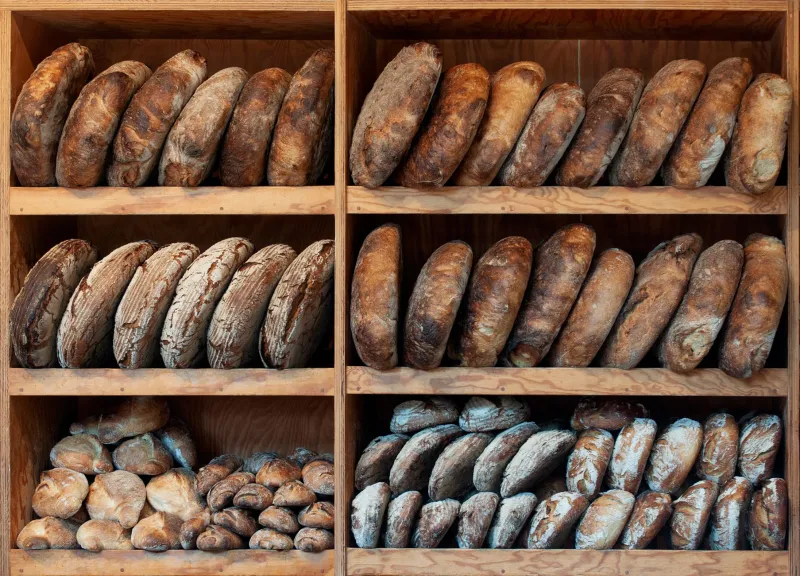
Picture your favorite local bakery. Maybe it has exposed brick, a chalkboard menu, and a line out the door on Saturday mornings. The sourdough is tangy and chewy, the croissants shatter at the right moment, and everything smells like it was made with intention. The word 'artisanal' might be on the sign, or the packaging, or at minimum in the general vibe of the place.
Now picture where the flour came from. The butter. The starter culture. The pre-portioned croissant dough that arrived frozen on a pallet at 5 a.m.
That second picture is less romantic. It's also more accurate — and once you understand why, the bakery you love doesn't get less impressive. It gets more interesting.
The Story Artisanal Bakeries Tell
The artisanal food movement in America built its identity around a specific set of images: small batches, traditional techniques, local ingredients, skilled hands doing work that machines can't replicate. Those images aren't invented. They reflect real values that real bakers hold.
But the word 'artisanal' has no legal definition in the United States. It's not regulated by the FDA, the USDA, or any federal agency. It doesn't require a minimum batch size, a specific sourcing standard, or any particular production method. It's a marketing descriptor — a word that signals a category of quality and intention rather than a documented set of practices.
Which means it can mean almost anything, and in practice, it often does.
The Industrial Backbone of the Local Bakery
Here's what the supply chain behind a typical well-regarded American artisanal bakery often actually looks like.
The flour likely comes from one of a small number of large milling operations — companies like King Arthur, Central Milling, or regional distributors that supply hundreds of bakeries across multiple states. The butter is almost certainly from a commercial dairy operation. The chocolate, vanilla, and specialty grains are sourced through food service distributors, the same companies that supply restaurants and institutional kitchens.
And in many cases — particularly for items like croissants, Danish pastries, and certain enriched breads — the dough itself arrives pre-made. Frozen, laminated croissant dough produced at industrial scale is a standard product in the professional baking supply chain. A bakery can receive it, proof it, bake it fresh each morning, and legitimately describe the result as freshly baked. Because it is freshly baked. The 'made from scratch' part just happened somewhere else.
This isn't fraud. It's how the modern food economy works at scale, and most professional bakers are completely transparent about it within the industry. The opacity exists primarily in the direction of the customer.
The Sourdough Starter Situation
Sourdough is the flagship product of the artisanal bread world, and its mythology runs deep. The starter — a living culture of wild yeast and bacteria — is often presented as the bakery's most precious asset, sometimes with a name and a documented history going back decades.
Some of those stories are entirely true. But commercial sourdough starters are also a product you can order from a catalog. Companies like Lallemand and others supply professional-grade starter cultures to bakeries across the country. A baker can receive a commercially produced culture, maintain it with genuine skill and care over time, and produce outstanding bread with it. The bread is real. The craft is real. The origin story is just... abbreviated.
The technique applied to sourdough — fermentation time, hydration, shaping, scoring, steam baking — is where genuine artisanal skill lives. That part is not industrial. But the starting point is often more standardized than the branding suggests.
Why the Gap Between Story and Reality Exists
The artisanal food economy grew in direct response to industrial food production. When Americans started caring deeply about where their food came from — a movement that accelerated through the 1990s and 2000s — the market responded with products and spaces that signaled smallness, locality, and craft. The demand for that story is real, and businesses built to meet it.
The problem is that running a bakery at a scale that actually pays its employees, covers rent in a major American city, and serves hundreds of customers a day requires infrastructure. You can't hand-mill every pound of flour and hand-shape every croissant and stay open. The economics don't work. So bakeries make practical decisions about where to apply craft and where to use industrial support — and the marketing rarely reflects that nuance.
What 'Artisanal' Actually Delivers
Here's the part worth holding onto: the craft element in a good artisanal bakery is real, even when the supply chain isn't romantic. The baker who knows how to proof croissant dough to exactly the right point, who can read a sourdough ferment by smell and texture, who makes decisions every morning based on humidity and temperature — that expertise is genuine and it matters. It's the difference between a good result and a great one.
The skill is artisanal. The ingredients often aren't. And the finished product can be legitimately excellent either way.
The Actual Story
The local bakery you love is probably doing something real and worth supporting. The 'handcrafted' label is describing the part of the process that happens in that building — and that part genuinely involves skill. But the supply chain behind it looks a lot more like the broader food economy than the branding suggests. Knowing that doesn't change how the bread tastes. It just gives you a more honest picture of how food actually gets made in America.