The Percentage on Your Receipt Wasn't Always There — Here's Who Put It
The Percentage on Your Receipt Wasn't Always There — Here's Who Put It
You finish dinner, the check arrives, and your eyes go straight to the bottom of the screen. Three buttons stare back: 18%, 20%, 22%. Maybe there's a fourth that says "Custom" in smaller text, like a disclaimer. You tap 20% without much thought because it's the middle option and the whole interaction takes about four seconds.
Nobody told you that 20% was the right number. Nobody had to. It just feels like the rule — a social contract written in invisible ink that every American somehow signed without reading.
Here's what's worth knowing: that number wasn't always there. It didn't come from a long tradition of grateful diners or a formal etiquette standard. It climbed — slowly, then quickly — pushed by forces that had almost nothing to do with gratitude.
What Tipping Actually Looked Like a Few Decades Ago
For most of the twentieth century, the standard tip in American restaurants was somewhere around 10 to 15 percent. Emily Post's etiquette guides — the closest thing the country had to an official rulebook on the subject — recommended 15% as a generous acknowledgment of good service. Ten percent was considered acceptable. Anything above 15% was exceptional.
This wasn't just cultural memory. It was reflected in the math. Older Americans who waited tables in the 1970s and '80s will tell you that 15% was the ceiling expectation, not the floor.
So what changed?
Inflation Did Some of the Work — But Not All of It
The most straightforward explanation is inflation. As menu prices rose, a fixed percentage tip theoretically delivered more dollars to servers without anyone having to renegotiate the social norm. A 15% tip on a $10 dinner in 1975 was $1.50. The same percentage on a $60 dinner today is $9. So in dollar terms, servers were already getting more.
But the percentage itself also moved. That's the part that deserves more attention.
By the 1990s and early 2000s, 15% was quietly repositioned as the minimum rather than the standard. Twenty percent started appearing in etiquette columns and lifestyle magazines as the new normal for decent service. The goalposts shifted, and most people didn't notice because it happened gradually and was reinforced by the people most motivated to reinforce it: the restaurant industry.
The Credit Card Receipt Changed Everything
Before credit cards became the dominant payment method, tipping was a physical act. You counted out bills, decided on an amount, and left it on the table. The decision was entirely yours, and nobody was watching the math.
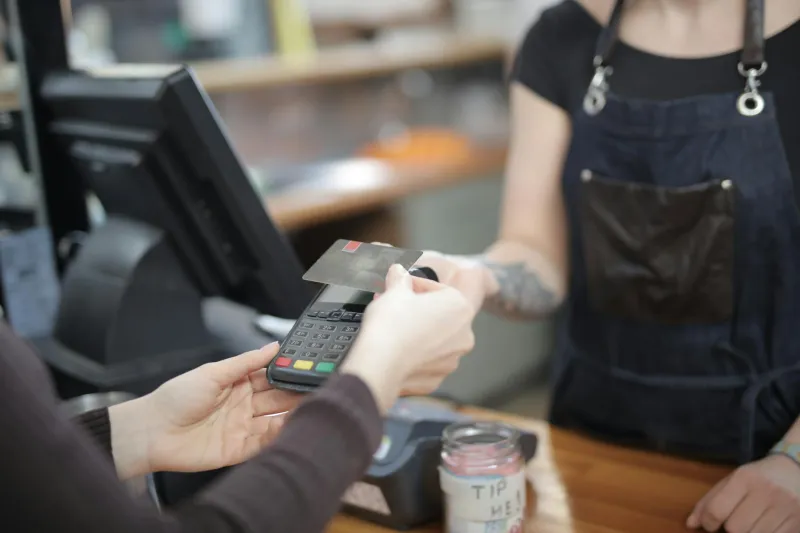
Credit card receipts changed that dynamic in a subtle but powerful way. Suddenly there was a line item. A blank space where a number had to go. And once point-of-sale technology got sophisticated enough, that blank space got replaced with suggestions.
The tip prompt — those preset percentages on a screen — is one of the most effective pieces of behavioral design in American commerce. Research on defaults and anchoring consistently shows that people gravitate toward pre-set options, especially in social situations where they're unsure of the norm. When the screen opens at 18%, 20%, and 22%, the psychological anchor is already set. Choosing "Custom" to enter 15% feels like a deliberate act of stinginess, even though 15% was the standard not long ago.
Restaurants and point-of-sale vendors had every incentive to set those defaults high. Nobody was setting them to 12%.
The Lobby Behind the Low Wages
There's a structural reason tipping expectations keep rising that doesn't get enough attention in casual conversation: the federal tipped minimum wage.
Under federal law, employers can pay tipped workers as little as $2.13 per hour — a figure that hasn't changed since 1991 — as long as tips bring total compensation up to the standard minimum wage. Most states have higher tipped minimums, but the federal floor is shockingly low, and the restaurant industry has lobbied aggressively to keep it that way.
This creates a system where the burden of paying workers a livable wage is effectively transferred from the employer to the customer — and where rising tip expectations aren't just a cultural quirk but a functional subsidy for an industry that has successfully avoided paying full wages for decades. When tip culture expands — into coffee shops, food trucks, and hotel lobbies — it often follows the same logic: keep labor costs low and let the social pressure of a tip screen fill the gap.
Why Nobody Pushed Back
The slow climb of the expected tip percentage worked partly because it happened incrementally, and partly because questioning it felt — and still feels — like attacking the workers themselves. If you suggest that 20% shouldn't be the automatic baseline, the conversation immediately becomes about whether you value service workers, which isn't the same conversation at all.
The system benefits from that conflation. It keeps the focus on the diner's generosity rather than on why wages are structured the way they are in the first place.
The Real Takeaway
None of this means you shouldn't tip. Service workers in most American states depend on tips in ways that aren't their fault and aren't going away anytime soon. But understanding how the expected percentage got to where it is — through default screens, industry lobbying, and a tipped wage that's been frozen since the early '90s — is genuinely useful context.
You didn't sign the contract. You were just handed the screen.