The Marketing Language That Means Nothing
Every week, millions of Americans reach for cleaning products adorned with leaves, flowers, and promises of being "natural" or "non-toxic." The bottles suggest purity, safety, and environmental responsibility. But here's what the cleaning industry doesn't advertise: these terms are completely unregulated.
No federal agency — not the EPA, not the FDA, not the Consumer Product Safety Commission — defines what "natural" or "non-toxic" actually means on a cleaning product label. Companies are free to use these words however they want, and they do.
How We Got Here
The cleaning products industry has operated in a regulatory gray zone for decades. Unlike food or pharmaceuticals, household cleaners face minimal ingredient disclosure requirements. The Federal Hazardous Substances Act requires warnings for immediate dangers, but it doesn't govern marketing language about what products don't contain.
This gap opened the door for what marketing experts call "clean labeling" — using health-conscious language to appeal to consumer concerns without making specific, verifiable claims. When surveys showed that 73% of American households actively seek "safer" cleaning products, manufacturers responded with marketing, not reformulation.
What 'Natural' Actually Tells You
A product labeled "natural" might contain plant-derived ingredients, synthetic chemicals identical to natural ones, or conventional cleaning agents with a few botanical extracts added. Some "natural" products work exactly like their conventional counterparts because they contain the same active ingredients — just derived differently.
Take citric acid, a common cleaning ingredient. Whether it comes from lemons or a laboratory, it's chemically identical and functions the same way. But one version gets to wear the "natural" badge while the other doesn't.
Meanwhile, truly natural substances can be plenty harmful. Poison ivy is natural. So is formaldehyde, which occurs in apples and is also a known carcinogen.
The 'Non-Toxic' Illusion
The term "non-toxic" creates an even bigger problem because toxicity isn't binary. Everything is toxic at some dose, and nothing is toxic at zero dose. Water can be fatal if you drink too much. Table salt becomes dangerous in large quantities.
Cleaning companies use "non-toxic" to mean different things: not immediately poisonous, safer than conventional alternatives, or simply marketing-friendly. Without regulatory standards, consumers have no way to know which definition applies.
What to Look for Instead
Smart shoppers skip the marketing language and focus on actual information. The EPA's Safer Choice program provides the closest thing to meaningful oversight, requiring products to meet specific ingredient criteria before earning the label.
Ingredient lists, while not always complete, offer more useful information than front-of-package promises. Products that voluntarily disclose all ingredients — not just active ones — typically demonstrate more transparency than those hiding behind vague "natural" claims.
Third-party certifications from organizations like Green Seal or EcoLogo involve actual testing and standards, unlike manufacturer-created badges that mean whatever the company wants them to mean.
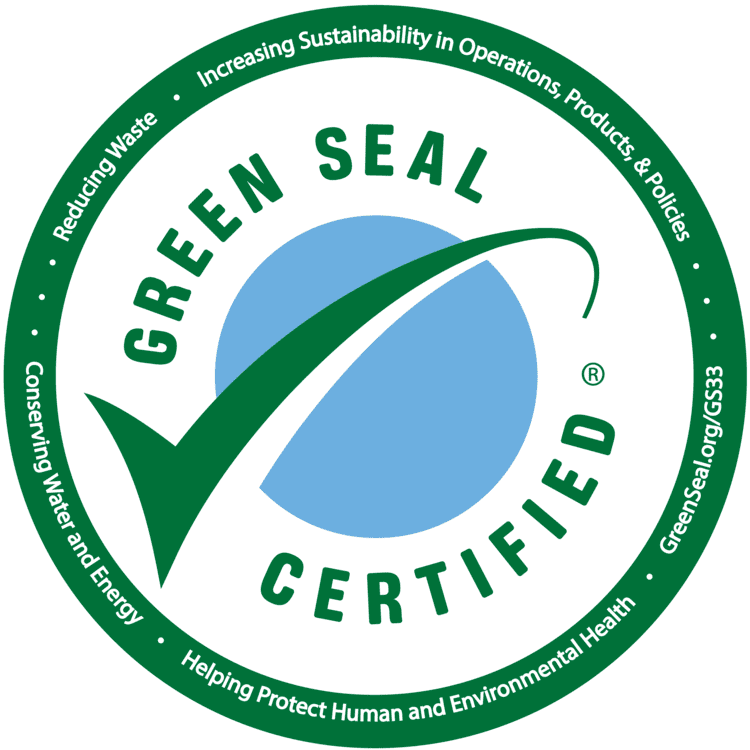 Photo: Green Seal, via alchetron.com
The Real Safety Equation
Effective cleaning often requires chemicals that can be harmful in concentrated forms or with improper use. The safest approach isn't necessarily buying products labeled "natural" — it's using any cleaning product correctly, storing it properly, and ensuring adequate ventilation.
Many conventional cleaners work faster and more effectively than their "natural" alternatives, potentially requiring less product and less scrubbing time. Sometimes the conventional option is actually the more practical choice.
Why This Matters
Americans spend over $3 billion annually on cleaning products, often paying premium prices for "natural" versions that may perform identically to cheaper alternatives. More importantly, the unregulated label system prevents consumers from making truly informed decisions about what they bring into their homes.
The solution isn't avoiding all cleaning products or trusting every "natural" claim. It's understanding that meaningful product evaluation requires looking beyond marketing language to actual ingredients, certifications, and performance data.
Until federal agencies establish clear definitions for terms like "natural" and "non-toxic," these labels will continue meaning whatever sells products rather than whatever protects consumers.