Those 'Educational' Bilingual Toys Are Teaching Your Kid Less Than You Think
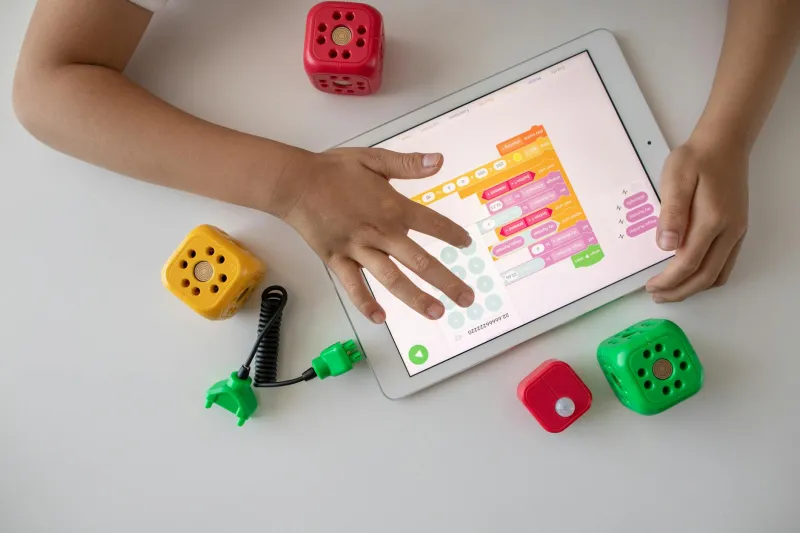
The $2 Billion Language Learning Toy Industry
Walk down any toy aisle in America, and you'll find shelves lined with products promising to give your child a head start in language acquisition. Tablets that speak Spanish, dolls that count in French, and building blocks that teach Mandarin phrases. Parents spend over $2 billion annually on these "educational" toys, driven by research showing that bilingual children have cognitive advantages.
But the science behind how children actually acquire language tells a very different story than what these product packages suggest.
What 'Bilingual' Actually Means on Toy Packaging
Unlike terms such as "organic" or "non-toxic," the word "bilingual" on children's products has no regulatory definition whatsoever. A toy can earn this label by including a single foreign word in its programming, playing pre-recorded phrases in another language, or simply having instructions printed in two languages.
The Fisher-Price Laugh & Learn Smart Stages Tablet, marketed as a bilingual learning tool, teaches Spanish through isolated words and phrases with no grammatical context. Children hear "rojo" for red and "azul" for blue, but learn nothing about how these words function in actual Spanish sentences. It's vocabulary memorization, not language acquisition.
Many "bilingual" toys are simply English toys with Spanish audio tracks added during manufacturing. The educational content wasn't designed with second language learning principles in mind—it was retrofitted with translation.
How Children Actually Learn Languages
Language acquisition research from the past three decades reveals that children learn languages through meaningful interaction with native speakers, not through passive audio exposure. The critical factors are social context, emotional connection, and responsive communication—none of which a toy can provide.
Dr. Patricia Kuhl's research at the University of Washington found that infants exposed to Mandarin through live interaction with native speakers showed significant language learning, while infants who heard the same content through audio or video showed no measurable progress. The difference wasn't the content—it was the human interaction.
 Photo: Dr. Patricia Kuhl, via xxivstore.com
 Photo: University of Washington, via e-dokumenti.bg
Children need to see how language functions in real situations, with real consequences and real responses. They learn "más" doesn't just mean "more"—they learn when to use it, how it changes meaning in different contexts, and what response it generates from Spanish speakers.
The Marketing Science Behind Bilingual Toys
Toy manufacturers have embraced bilingual labeling because it allows them to charge premium prices for standard products. The same electronic toy that costs $25 in its English-only version can command $40-50 when marketed as a bilingual learning tool.
This pricing strategy works because parents interpret "bilingual" as educational value. Market research shows that parents associate foreign language exposure with cognitive development, academic success, and future career advantages—all of which are supported by research on actual bilingualism.
The disconnect is between genuine bilingual education and bilingual product marketing. Real bilingualism requires years of consistent exposure and practice; toy marketing suggests it can be achieved through play sessions.
What Actually Works for Raising Bilingual Children
Successful bilingual families rely on strategies that no toy can replicate. The most effective approach is consistent exposure to native speakers who have emotional relationships with the child—parents, grandparents, caregivers, or close family friends.
Children who become functionally bilingual typically hear their second language for several hours daily in meaningful contexts. They sing songs, hear stories, negotiate conflicts, and express emotions in both languages. The language becomes a tool for real communication, not just vocabulary practice.
Community resources often provide more genuine language exposure than expensive toys. Spanish-speaking playgroups, bilingual story time at libraries, and relationships with native-speaking families create the social context that drives language learning.
The Opportunity Cost Problem
Money spent on bilingual toys represents an opportunity cost for families serious about language learning. The $200 spent on electronic learning devices could fund months of classes at community centers, bilingual books from the library, or cultural events where children hear authentic language use.
More importantly, the time children spend with bilingual toys could be spent in conversation with bilingual adults, watching age-appropriate content in the target language, or participating in activities where the second language serves a genuine purpose.
When Bilingual Toys Can Help
Bilingual toys aren't entirely useless—they can supplement real language learning by providing vocabulary reinforcement and pronunciation models. But they work best when integrated into broader language learning strategies that include human interaction and cultural context.
A Spanish-speaking parent might use a bilingual toy to practice vocabulary they've introduced through conversation, or a child learning Mandarin might use educational apps to supplement weekly classes with native speakers.
The key is understanding these tools as supplements to real language learning, not substitutes for it.
The Real Investment in Bilingualism
Raising a bilingual child requires sustained commitment from families, not just purchasing decisions. The most successful bilingual families treat language learning as a lifestyle choice that influences everything from neighborhood selection to vacation destinations.
This doesn't mean expensive toys are never worth buying—but understanding what they can and cannot accomplish helps parents invest their time and money in strategies that actually produce bilingual children.
The next time you see a "bilingual" toy promising to give your child language skills, remember that the most effective language learning tool your child can access is a conversation with someone who loves them in the language they're trying to learn.