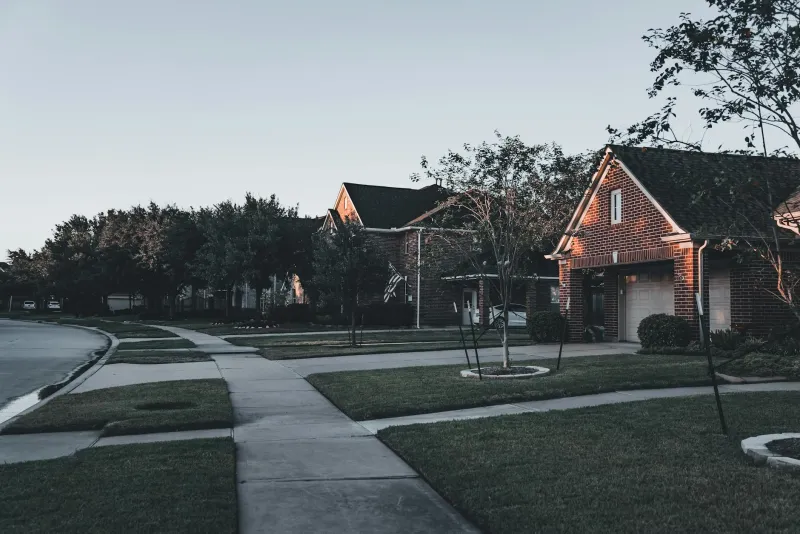
Drive through any American suburb and you'll see the same sight repeated endlessly: pristine rectangles of green grass stretching from sidewalk to front door. The lawn is so fundamental to American residential life that it seems natural, inevitable, like it grew organically from the soil of the New World.
It didn't. The American lawn is one of the most successful marketing campaigns in history, a corporate creation that was systematically engineered into the landscape by real estate developers, grass seed companies, and federal housing policy.
What most Americans consider a natural expression of homeownership is actually a manufactured aesthetic that nobody voted for, but everyone is now legally required to maintain.
Before Lawns: What American Yards Actually Looked Like
Before the 1950s, most American homes didn't have lawns as we know them today. Front yards were practical spaces used for vegetable gardens, fruit trees, or simply left as natural ground cover. Even wealthy estates typically featured elaborate gardens, not expanses of uniform grass.
The concept of a manicured lawn existed, but it was limited to institutions like golf courses, public parks, and the estates of the extremely wealthy who could afford the army of groundskeepers required to maintain them.
For most Americans, the idea of dedicating significant time and money to growing grass that served no practical purpose would have seemed absurd. Yards were for function, not display.
The Corporate Campaign Begins
The transformation started in the 1920s with a coordinated effort by multiple industries that stood to profit from lawn culture. Seed companies, fertilizer manufacturers, and lawn equipment producers began promoting the idea that a well-maintained lawn was a sign of good citizenship and social status.
The O.M. Scott and Sons Company, a major seed producer, launched one of the most influential campaigns. Their marketing materials explicitly linked lawn care to American values, suggesting that maintaining a perfect lawn demonstrated patriotism, community responsibility, and personal character.
Lawn mower manufacturers joined the campaign, advertising their products not just as tools but as necessities for respectable homeownership. The message was clear: without a proper lawn, you weren't a proper American.
Government Gets Involved
The real breakthrough came after World War II, when federal housing policy actively promoted lawn culture. The Federal Housing Administration, which backed millions of suburban mortgages, included lawn requirements in their property standards.
 Photo: Federal Housing Administration, via thumbs.dreamstime.com
FHA guidelines specified that new suburban developments should include "appropriate landscaping," which in practice meant front lawns. Developers who wanted FHA backing for their projects had to design communities around the lawn aesthetic.
The Veterans Administration, which provided home loans to returning soldiers, adopted similar standards. Suddenly, the federal government was using its massive housing programs to enforce a specific vision of what American homes should look like.
The Levittown Model
The most influential example was Levittown, the massive suburban development in New York that became the template for postwar American housing. Developer William Levitt didn't just build houses — he engineered entire communities around the lawn concept.
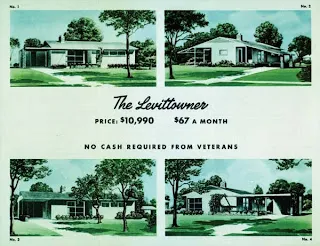 Photo: William Levitt, via 4.bp.blogspot.com
Levittown homes came with pre-seeded front lawns and detailed maintenance requirements written into the property deeds. Homeowners were legally required to mow regularly, water appropriately, and maintain their grass according to community standards.
The Levittown model was copied across the country, spreading the lawn requirement from coast to coast. What started as one developer's aesthetic preference became the standard for American suburban life.
The HOA Enforcement Machine
As suburban development exploded in the 1960s and 70s, homeowners associations became the enforcement arm of lawn culture. HOAs wrote increasingly detailed rules about grass height, acceptable plant varieties, and maintenance schedules.
These rules weren't democratically chosen by homeowners — they were typically written by developers before the first house was sold, then enforced by HOA boards that often included representatives from the development company.
Today, millions of Americans live under HOA rules that legally require them to maintain lawns according to standards they had no role in creating. Failure to comply can result in fines, liens, and even foreclosure.
The Marketing Psychology
The success of lawn culture wasn't accidental. Marketing campaigns deliberately tapped into deep psychological and social needs. Lawns were positioned as symbols of prosperity, stability, and belonging.
Advertising materials suggested that neighbors judged homeowners based on their lawn quality, creating social pressure to conform. The message was reinforced through television shows, magazines, and community standards that made lawn care seem like a natural part of responsible adulthood.
The campaigns also exploited American anxieties about social status and community acceptance. A perfect lawn became a way to signal that you belonged in middle-class suburbia, while a neglected lawn marked you as an outsider.
The Environmental Cost Nobody Calculated
The corporate creators of lawn culture didn't consider the environmental implications of their marketing success. Today, lawns cover more than 40 million acres in the United States — an area larger than any single crop.
Maintaining this grass requires enormous inputs of water, fertilizer, and pesticides. The EPA estimates that lawn care accounts for nearly 60 million pounds of pesticides annually and 17 billion gallons of fuel for mowing equipment.
Many suburban communities now face water restrictions and pollution problems directly linked to lawn maintenance, yet the cultural pressure to maintain perfect grass remains stronger than environmental concerns.
The Legal Lock-In
What makes the American lawn particularly remarkable is how thoroughly it became legally embedded in the landscape. Zoning laws, HOA regulations, and local ordinances now enforce lawn requirements across much of suburban America.
Homeowners who want to replace their lawns with native plants, vegetable gardens, or other alternatives often face legal obstacles created by regulations written decades ago to promote the corporate lawn vision.
In many communities, you can legally face fines or criminal charges for letting your grass grow too tall, but you can't legally replace it with more environmentally appropriate alternatives.
The Persistence of Manufactured Tradition
Today, most Americans maintain lawns not because they chose the aesthetic, but because they inherited a landscape designed by corporate interests and enforced by legal requirements. What feels like cultural tradition is actually the result of one of the most successful social engineering projects in American history.
The perfect irony is that the suburban lawn — supposedly a symbol of individual homeownership and personal choice — is actually one of the most regulated and conformist aspects of American life. Millions of people spend their weekends maintaining an aesthetic they never selected, enforced by rules they never voted for, to meet standards created by companies that profited from the requirement.
The American lawn isn't a natural feature of the landscape or an organic expression of cultural values. It's a product that was sold so successfully that it became indistinguishable from tradition itself.